AI-First Programmatic SEO (PSEO) Agency for B2B SaaS

Don't write 50 pages. Ship 5,000 that all convert.

PipeRocket Digital is an AI-first programmatic SEO agency (PSEO) for B2B SaaS companies. We build scalable SEO programs that generate comparison pages, alternative pages, integration pages, use-case pages, location pages, and category landers at scale, engineered around real buyer intent and tied to qualified pipeline. AI agents handle research, template design, content variation, and quality control while senior strategists own every decision, so programmatic does not mean thin or spammy.

5.0 out of 5 stars
Book free consultation
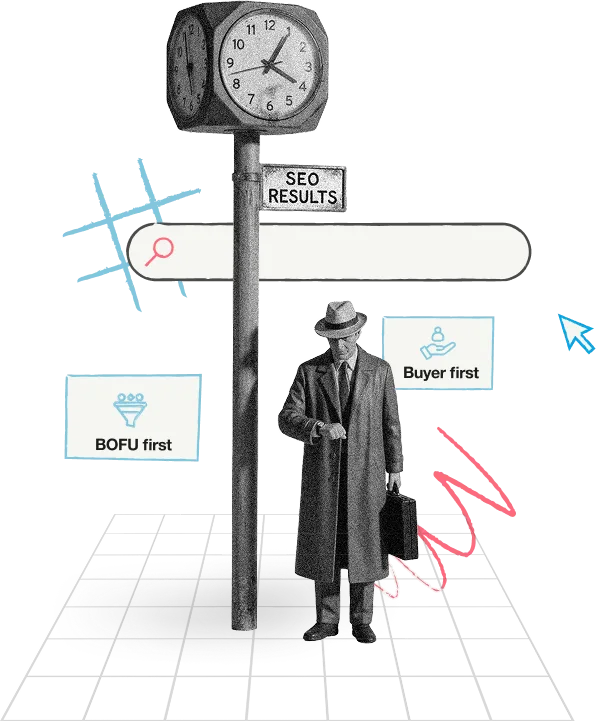
Vintage figure under an SEO Results street clock
Leading SaaS companies that choose us

How our programmatic SEO agency turns templates into pipeline

Real intent over fake volume

Most programmatic SEO scrapes a list of city names or competitor names and prints pages. We start with the searches your buyers actually run when they are evaluating, integration queries, comparison searches, alternative-to searches, use-case combinations, and reverse-engineer the template from real intent before any page is generated.

Quality at scale

Programmatic SEO got a bad reputation because most agencies generate thin pages that Google de-ranks within a quarter. Every page in our PSEO program is fed by a unique data row, written through a quality-control agent, and reviewed by a human before it goes live. Scale without the spam penalty.

Compounding inventory

One well-engineered template can produce hundreds of ranking pages. Comparison pages, alternative pages, integration pages, location pages, use-case landers, the inventory compounds because every new data row becomes a new page. Editorial SEO can never match this surface area at the same cost.

Pipeline-tied, not traffic-tied

Programmatic pages without conversion logic just inflate traffic graphs. Every template we build includes the CTA path, the MQL trigger, and the segment-aware messaging baked in. We report on which template types and intent categories produce pipeline, not how many URLs got indexed.

Working With PipeRocket

Why B2B SaaS teams choose PipeRocket as their AI-first programmatic SEO agency

Programmatic SEO is high-leverage when done right and a Google penalty risk when done wrong. The gap between the two is everything your PSEO partner does between generating a template and shipping the 5,000th page.

In house
Other agencies
Programmatic SEO is on the roadmap. The engineering team is busy. Marketing files tickets that never get prioritised.
Template gets built in a CMS. Pages get spun up from a public dataset. Nobody reviews the output before it goes live.
Template universe gets mapped from real buyer search behaviour first. Data layer, content engine, and quality control are built in parallel. Pages ship in week three, not quarter three.
50 city pages get launched. Three rank. The rest sit there earning no traffic.
5,000 pages get launched. 50 rank. Google issues a manual action three months later for thin content.
Every page is engineered with a unique data row, schema, internal linking, and a conversion path. Indexation and rankings are monitored daily, underperformers are consolidated, not abandoned.
Comparison pages and alternative pages get written one at a time. By month six there are four of them, none of them rank.
"Competitor vs Competitor" pages get generated from public data. The actual differentiation buyers care about is missing. Pages bounce.
Each comparison and alternative page is fed by buyer-language data extracted from your sales call recordings. The differentiators that close deals appear on the page. Bounce rate is the lowest of any page type.
Programmatic content lives on a sub-domain, separated from the main site. Authority does not transfer. Pages never rank past the homepage.
Programmatic pages live in a folder with no internal linking strategy. Each page is an orphan. Crawl budget gets wasted.
Programmatic templates are wired into the main-site information architecture with category hubs, internal linking, and topical clustering. Authority compounds. Crawl budget is preserved.
Reporting stops at page count and impressions. Nobody can answer which programmatic templates actually drove a deal.
Reporting is a dashboard of organic sessions. Pipeline contribution is treated as someone else's problem.
Reporting ties each template type and intent category to MQLs, SQLs, pipeline influenced, and CAC payback. Templates that compound get scaled. Templates that do not get cut.
Manual cycles. Building the template takes a quarter. Filling in data rows takes another. Senior strategists end up writing copy.
"AI-powered" labels in the marketing copy. Underneath, a junior writer is still copy-pasting variables into a CMS template.
AI agents run template generation, data variation, quality control, and pipeline attribution in hours instead of weeks. 5,000 pages can be ready in 30 days. Senior strategists stay senior, they own the template and the targeting.


50+ B2B SaaS brands have scaled organic pipeline with our programmatic SEO

PipeRocket is exactly what HyperVerge needed to start our performance marketing efforts. Their experience, actionable strategies brought in 51 high-quality MQLs in just 3 months. Specifically, the team's approach towards fine-tuning campaigns across regions not only grew our leads but also saved us costs.

Navien
Navien
Head of Marketing

Working alongside PipeRocket has been a commendable experience for Storylane. We were looking into how to boost our qualified leads. Their comprehensive analysis, strategic initiatives, end-to-end campaign structuring, landing page experimentation, and targeted remarketing delivered remarkable results for us.

Nalin
Nalin
CEO

They worked closely with us and took ownership like our in-house team. The team ran over 10 experiments to identify what was working and invalidated two new geographies for the ads. Moreover, PipeRocket Digital was responsive, open to feedback, and eager to meet the objectives.

Anusha
Anusha
Founding member

PipeRocket Digital has grown our organic traffic 5X over eight months and their organic leads by 25% over six months. The team is prompt and involved strategically and in execution. Moreover, their in-depth understanding of SEO and consistent involvement make them a reliable partner.

Nivas
Nivas
Head of Marketing

PipeRocket Digital helped us achieve 2.2 times more organic search traffic growth and a 50% improvement in ROAS. The team worked as an extended team and delivered tasks promptly. PipeRocket Digital was committed to driving growth and continuously learning and improving.

Saptharishi Baradhan
Saptharishi
Head of Demand Generation

Thanks to PipeRocket Digital's work, we saw a 279% increase in organic traffic. The team also helped the client grow from six to 338 keywords, ranking in the top 10 positions. The team was highly responsive to feedback, quickly adjusted to changes, and showed outstanding SEO expertise.

Srividhya Karthik
Srividhya Karthik
Head of Marketing

Page count is not a success metric.

Customers
CUSTOMERS
Pipeline
PIPELINE
Revenue
REVENUE

Five AI agents run your programmatic SEO data.
Senior strategists run your strategy.

Most "programmatic" SEO offerings are a CMS template and a public spreadsheet. We built our PSEO delivery around AI agents that own the data work, template variation, and quality control, so 5,000 unique pages ship in 30 days without the spam-page risk.

AI in programmatic SEO
Intent & Template Research Agent +
Scans every long-tail query, comparison search, alternative-to search, integration query, and use-case combination your buyers run. Maps the template universe before a single template gets designed. Which permutations have real buyer intent and which look big on paper but never convert stays a senior call.
Content Variation Agent +
Generates the unique content for each data row, comparison narrative, alternative angle, integration walkthrough, use-case framing, pulled from your product docs, sales call transcripts, and category research. Every page reads like it was written for that exact buyer, not a placeholder filled with variables.
Template & Conversion Agent +
Designs the template layout, schema markup, structured data, and CTA logic so each generated page converts, not just ranks. Comparison-page CTA logic differs from integration-page logic; the template encodes both. Which layout earns the demo stays with the team.
Quality Control & Indexation Agent +
Reviews every generated page for thin-content risk before publish, monitors indexation daily, and flags pages that Google quietly drops. Underperformers are consolidated, not abandoned. Internal linking and crawl-budget allocation are tuned continuously so authority compounds across the program.
Pipeline Attribution Agent +
Connects every template type and intent category to your CRM, surfacing MQLs, SQLs, pipeline influenced, and CAC payback by page family. The reporting your board actually wants, by template, by intent, by segment. Which programmatic categories scale and which get cut stays a senior decision.

We rebuilt programmatic SEO around autonomous agents.

AI agents own the data work autonomously, template variation, entity research, internal linking, quality control. Senior strategists own the calls that decide what scales and what stays unpublished.

Pillar 01

Agents that finish, not assist

Our agents run the full PSEO workflow end to end: dataset building, template variation, entity research, internal-link mapping, quality control. Not chatbots. Not co-pilots. Autonomous agents that ship publish-ready pages, not drafts.

Pillar 02

Thousands of pages, zero spam

Agents generate genuine per-page value, unique data, intent-matched modules, and flag thin or duplicative pages before they publish. 5,000 pages ship in 30 days without the doorway-page risk that triggers manual actions.

Pillar 03

Editorial calls stay senior

Agents produce the data layer: templates, entity maps, link graphs, QC reports. Senior strategists decide which templates scale, which clusters to build, and what stays unpublished. Strategy is never delegated to a model.

Pillar 04

Ranked, indexed, tied to pipeline

Every agent reports to one outcome: qualified pipeline. We do not optimise for page count or impressions in isolation. Indexation rate, rankings, and pipeline influenced by template surface continuously, not at month-end.

The PipeRocket programmatic SEO approach

Each phase is built around what makes programmatic SEO actually rank, convert, and survive a Google update.

Map the template universe

We start by mapping every searchable permutation buyers actually run: comparison searches, alternative-to searches, integration queries, use-case combinations, location-by-product searches, feature-by-segment searches.

Each permutation becomes a candidate template. The ones with real pipeline potential survive; the rest get cut before any page is built.

Build the data layer

Every programmatic page needs a unique data row. We build the structured data layer from your product docs, your sales call transcripts, third-party APIs, competitor profiles, and verified review data.

The data layer is the moat. Generic data produces generic pages. Specific, verified, structured data produces pages that rank and convert.

Engineer the template

The template encodes the layout, schema, internal linking, CTA logic, conversion path, and structured data markers. Each template is designed for the specific intent: comparison templates differ from integration templates differ from use-case templates.

One well-engineered template can ship hundreds of ranking, converting pages.

Generate at scale

AI agents take the data layer and the engineered template and produce the unique content for each row, the comparison narrative, the alternative angle, the integration walkthrough, the use-case framing.

5,000 unique pages can be ready in 30 days. None of them read like placeholders with variables filled in.

QA every variation

Before a page goes live, a quality-control agent checks it against thin-content thresholds, factual accuracy, schema validation, and conversion-path completeness. Pages that fail get refined or cut, not published.

This is the step most programmatic agencies skip. It is the difference between a compounding inventory and a Google manual action.

Internal linking architecture

Programmatic pages without internal linking are orphans. We wire each template family into the main-site information architecture with category hubs, sibling linking, and topical clustering so authority compounds and crawl budget is preserved.

The 5,000th programmatic page benefits from the authority of the first 4,999.

Monitor and refresh

Indexation, ranking, and pipeline contribution are tracked daily by template type. Pages that drop get refreshed; underperforming categories get consolidated; new search permutations get added to the template universe as buyer behaviour evolves.

Programmatic SEO is not a one-time launch, it is a compounding asset that needs continuous tuning.

Scale what compounds

Performance is reviewed by template family, intent category, and segment. When a template type consistently drives qualified pipeline, we deepen the data layer, add more variations, and expand the template universe.

We scale what compounds and cut what does not. Page count without pipeline is not a metric we celebrate.

Programmatic pages need to be cited by AI engines, not just ranked.

94% of B2B buyers now use LLMs to evaluate vendors. A 5,000-page programmatic program that does not surface in ChatGPT, Perplexity, or Google AI Overviews is leaving half the demand on the table. We engineer programmatic templates with citation-grade schema and retrieval-friendly structure so the pages rank in Google and get cited by AI engines.

See our AEO/GEO program

Success Stories

Storylane

Driving 2.5X Growth and 82% More Demos: Storylane's Success with PipeRocket's Campaigns.

Read full story
DevRev

Achieving 127% Organic Traffic Growth in 6 Months: DevRev's Case Study with PipeRocket.

Read full story
Spendflo

From Stagnation to Domination: PipeRocket's Impact on Spendflo's 81% Traffic Rise.

Read full story

Inside the five-agent programmatic SEO stack we deploy on every account

Each agent owns one layer of the PSEO workflow, dataset, templates, internal links, quality control, attribution. They ship thousands of pages in weeks and report straight to the senior strategist on your account.

Dataset & Entity Research Agent

Builds the structured dataset behind every page set, entities, attributes, intent modifiers, scraped and validated from authoritative sources, so each template has genuine, unique data to render.

Template & Variation Agent

Generates page templates and per-page variation that reads as written-for-one, not spun, intent-matched modules, dynamic FAQs, comparison logic, so pages earn their index slot.

Internal Linking Agent

Maps and maintains the internal link graph across thousands of pages, hub-and-spoke clusters, contextual links, orphan detection, so authority flows where it converts.

Quality Control Agent

Crawls every generated page for thin content, duplication, and indexation risk before publish, and flags pages Google would treat as doorway pages. Nothing ships that could trigger a manual action.

Pipeline Attribution Agent

Connects programmatic landing pages to your CRM, surfacing indexation rate, rankings, MQLs, and pipeline influenced by template and cluster. The reporting your board wants, continuously, not at month-end.

Our Tech Stack

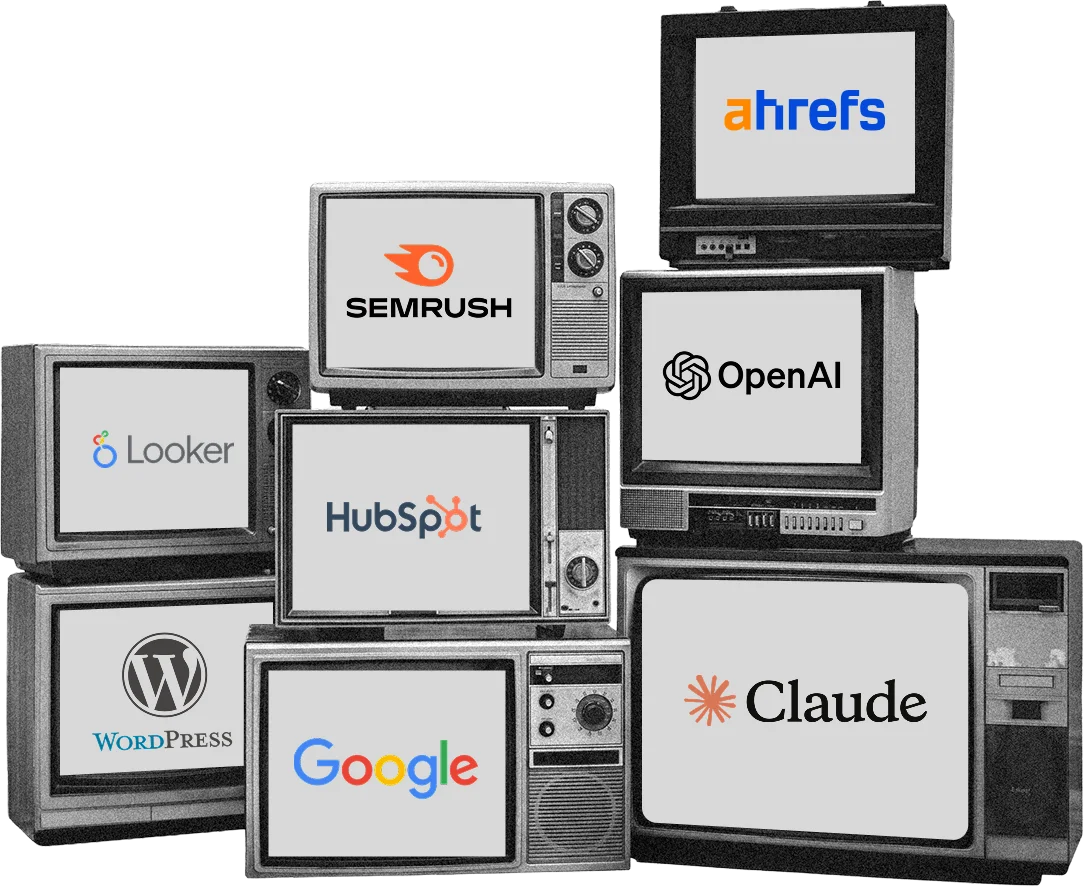
Better tools do not produce better SEO. Better judgment does. We happen to have both.

Tech stack tools

Frequently asked questions

What is programmatic SEO (PSEO)? +
Programmatic SEO (sometimes called PSEO or scalable SEO) is the practice of generating hundreds or thousands of unique landing pages from a single template plus a structured data layer. Each page targets a specific long-tail intent: a comparison query, an alternative-to query, an integration combination, a use-case lander, or a location-by-product permutation. Done well, it produces a compounding inventory of pages that rank and convert. Done poorly, it produces thin spam that Google de-ranks.
What is a programmatic SEO (PSEO) agency? +
A programmatic SEO agency designs the template universe, builds the data layer, engineers the templates, generates the pages, runs quality control, wires the internal linking, and ties everything to pipeline reporting. The best PSEO agencies are AI-first because the data and content variation work is exactly what AI agents do well. The mediocre ones just resell a CMS template and a public dataset.

How is AI-first PSEO different from generic programmatic SEO? +
Generic programmatic SEO uses a template and a public dataset to print pages. AI-first PSEO uses AI agents to map the template universe from real buyer intent, generate unique content for each data row from your sales call transcripts and product docs, quality-check every page before publish, and tie reporting back to pipeline by template type. The output is the same surface area, the conversion rate and Google durability are not comparable.
Is programmatic SEO spammy? +
It can be. Programmatic SEO got its bad reputation because most agencies generate thin pages from a public dataset and ship without quality control. Google then issues thin-content manual actions or quietly de-ranks the entire template family. We design every program around a unique data row per page, AI-powered content variation, quality-control review before publish, and continuous indexation monitoring. The result is a compounding asset, not a Google penalty.
What types of programmatic pages work for B2B SaaS? +
The highest-converting programmatic templates for B2B SaaS are: comparison pages (X vs Y), alternative pages (X alternative to Y), integration pages (X integrates with Y), use-case pages (X for <use case>), feature-by-segment pages (X for <industry>), and category landers. Location pages can work for B2B SaaS in specific cases (compliance-bound categories) but rarely produce pipeline for horizontal SaaS.
How many pages can you generate? +
As many as your data layer supports. We have shipped programs ranging from 50 highly engineered comparison pages to 5,000+ pages across multiple template families. The right number is driven by buyer-intent permutations and data-row uniqueness, not how big a number we can spin up.
How long before programmatic SEO drives pipeline? +
Template universe and data layer get built in weeks one and two. First pages ship in week three. High-intent BOFU templates (comparison, alternative) typically start producing MQLs within 30 to 60 days of publish. Lower-intent templates take 60 to 90 days to compound. Pipeline impact accelerates as the program scales because every new template family inherits authority from the existing inventory.
How much does a PSEO engagement cost? +
Engagements start at $5,000/month for a focused single-template program (e.g. comparison pages or integration pages only). Multi-template programs scale from there. Pricing is driven by the number of template families, the depth of the data layer, and the QA load. We size every proposal against pipeline goals, not page-count vanity.


Do programmatic pages get cited by ChatGPT and AI search? +
They can, and they should. Programmatic templates engineered with structured schema, factual density, and citation-grade content are exactly what AI engines retrieve from. We design every template with both Google ranking and AI-engine citation in mind, and pair PSEO with our AEO/GEO program so the same surface area earns dual visibility.
Can programmatic SEO work alongside editorial SEO? +
They are complements, not alternatives. Editorial SEO builds topical authority and answers higher-funnel buyer questions; programmatic SEO scales BOFU surface area across comparison, alternative, and integration intent. Most of our clients run both as one integrated program through our SaaS SEO service.

Page-count alone is not pipeline. Let's build PSEO that compounds.

We work with a small number of B2B SaaS companies at a time. If your programmatic SEO surface area is thin, orphaned, or unranked, let's find out if we're the right fit.

Book free consultation